Iron & Bloom
Framed Butterfly Specimen | Paper Kite Butterfly (5x7)
Framed Butterfly Specimen | Paper Kite Butterfly (5x7)
Couldn't load pickup availability
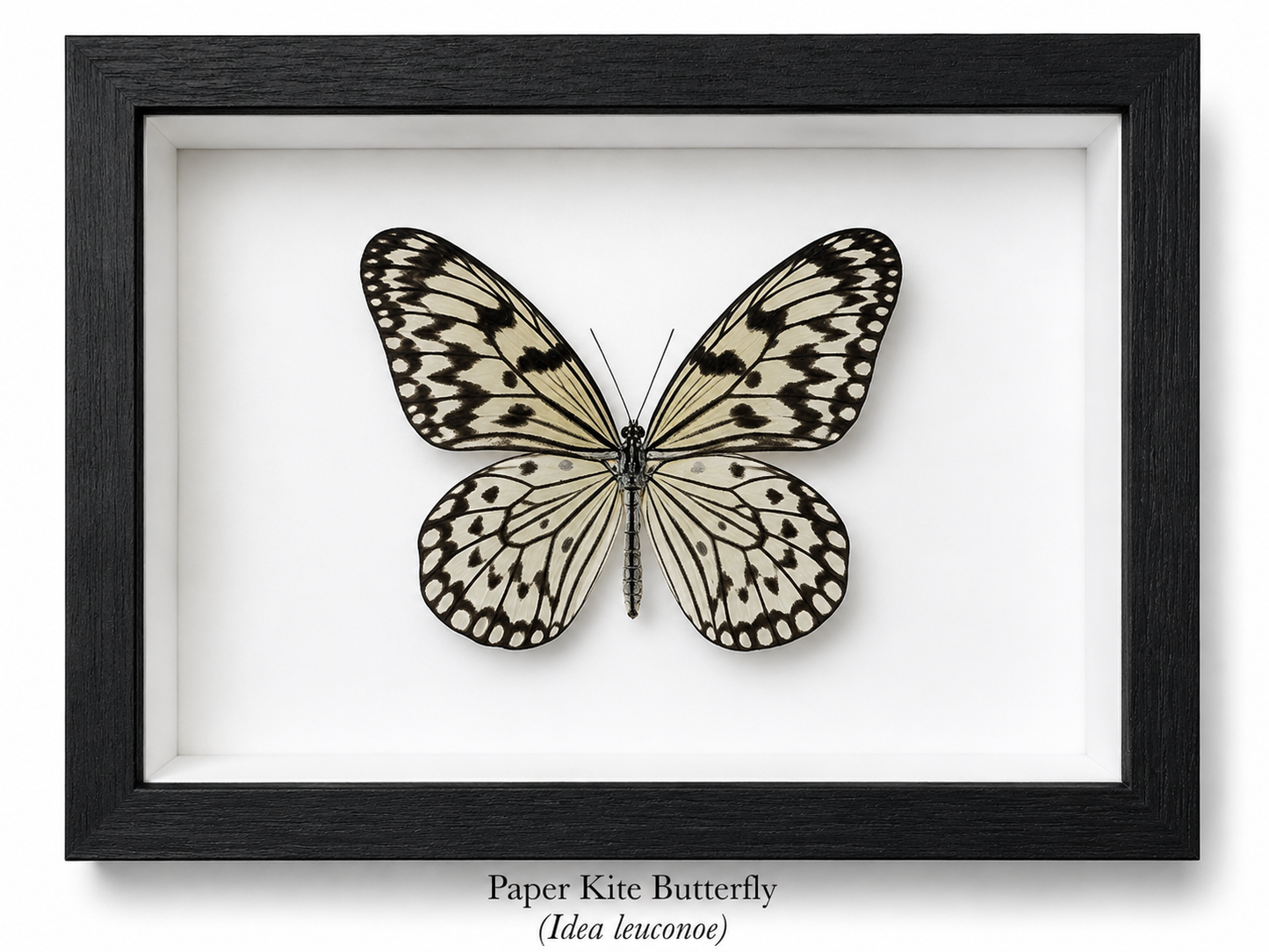
Paper Kite Butterfly
(Idea leuconoe)
A preserved butterfly specimen, suspended within a floating frame designed to showcase its natural form from every angle.
Each piece is one-of-a-kind, with subtle variations that make every specimen unique.
Description
Bring a piece of natural history into your space with this floating butterfly specimen. Carefully preserved and mounted by hand, each butterfly is displayed between clear panels that create a clean, weightless presentation.
Known for its delicate black-and-ivory patterning, the Paper Kite Butterfly carries an airy, almost illustrated appearance that feels both elegant and graphic. Its translucent-looking wings and symmetrical markings create a striking balance between softness and contrast.
This style highlights the intricate details of the wings while allowing the butterfly’s distinctive pattern to stand out as a refined focal point in any space.
No two are exactly alike. Variations in pattern, tone, and texture are part of what make each specimen distinctive.
Details
- Frame size: 5" x 7"
- Style: Floating frame display
- Finish: Black-edged frame
- Specimen: Real preserved butterfly
- Mounting: Hand-set and secured between panels
Display
Designed for shelves, gallery walls, desks, or layered natural history displays. The balanced black-and-white coloration makes this specimen especially versatile across modern, minimalist, gothic, or curated interiors.
Beautiful as a standalone piece or paired with other preserved specimens for a cohesive collection.
Please Note
Due to the natural variation in butterfly specimens, your piece may differ slightly from the image shown. These differences are part of the character and authenticity of each display.
Specimen
Paper Kite Butterfly
(Idea leuconoe)
Named for its graceful drifting flight, the Paper Kite Butterfly is admired for its soft ivory wings and bold black veining. Its distinctive monochromatic patterning gives it an almost hand-drawn appearance, making it one of the most visually recognizable butterflies in natural history displays.
Share